
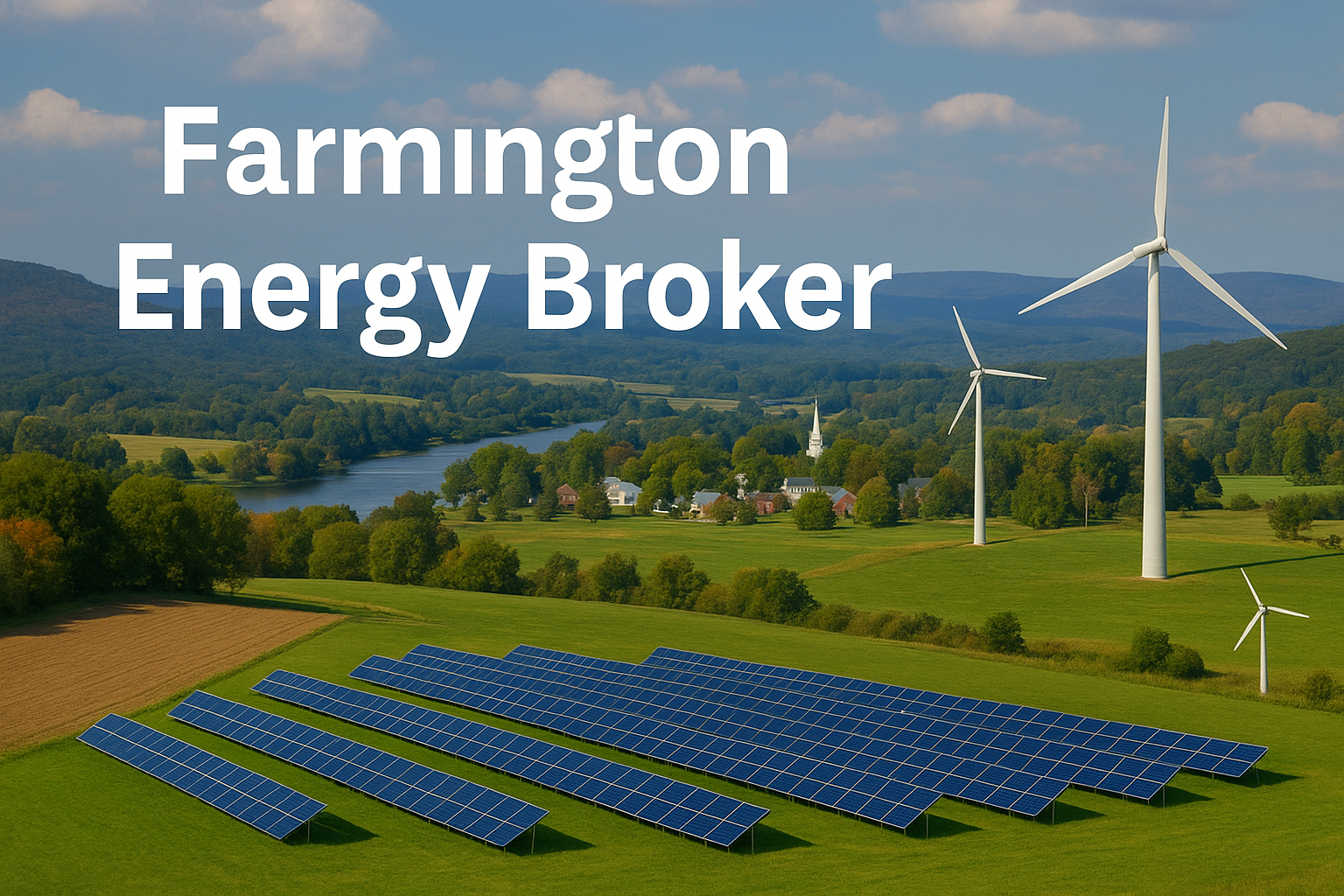
## CT-Farmington Energy Brokers and Consultants
Farmington, Connecticut, sits ten miles west of Hartford in the scenic Farmington Valley. Settled in 1640, the town is one of the oldest inland communities in New England and retains a blend of colonial charm and modern vibrancy. Today Farmington is part of the **Capitol Planning Region** and has **26,712 residents** spread across **28.8 square miles** of rolling hills, fertile floodplains and woodlands. From historic Main Street lined with 18th‑century estates to the suburb of Unionville, Farmington offers small‑town ambience alongside major corporate campuses such as Otis Elevator and United Technologies. Businesses large and small—from medical-device manufacturers near the hospital to farms along the river—enjoy the freedom to choose electricity and natural‑gas suppliers thanks to Connecticut’s deregulated energy market.
Connecticut’s deregulation gives Farmington enterprises significant opportunities—but also complexity. Wholesale energy prices fluctuate with weather and markets; tariff structures change; and sustainability mandates continue to evolve. **Energy brokers and consultants** help Farmington organizations navigate these intricacies, secure competitive rates and implement forward‑thinking energy strategies.
### Become Farmington Energy Broker – [Click Here](https://affiliateenergy.net/) | Need a Farmington Energy Broker – [Click Here](https://bidonenergy.org)
### Why Farmington Businesses Need Energy Brokers
Operating a business in Farmington means balancing budgets while keeping employees comfortable, equipment running and customers happy. An experienced energy broker delivers value in several ways:
– **Access to suppliers.** Deregulation opened Connecticut’s electricity and natural‑gas markets to multiple suppliers. Brokers maintain relationships with reputable suppliers and monitor market trends to identify the most competitive offers for each client.
– **Risk management.** Seasonal heat waves, winter cold snaps and geopolitical events can cause price spikes. Brokers use strategies such as block‑and‑index contracts, layered purchasing and demand‑response enrollment to mitigate volatility.
– **Demand‑charge optimization.** Manufacturers in the Unionville industrial corridor and large office campuses near Route 4 pay demand charges based on peak usage. Consultants analyze load profiles and recommend operational changes, on‑site generation or storage to flatten peaks and reduce charges.
– **Regulatory compliance.** Businesses must comply with ISO‑New England’s reliability requirements, Renewable Portfolio Standards and state emissions rules. Brokers ensure clients meet these obligations and manage renewable energy certificates (RECs), green‑power plans and reporting.
– **Sustainability and branding.** Eco‑conscious consumers expect companies to reduce carbon footprints. Brokers connect Farmington companies with solar developers, green‑bank incentives and battery‑storage options, helping them showcase sustainability leadership.
### Key Services Offered by Farmington Energy Consultants
**Electricity Procurement and Natural‑Gas Sourcing:** Brokers obtain competitive quotes tailored to each client’s usage pattern, risk tolerance and credit profile. Manufacturers may benefit from blended contracts that combine fixed and variable pricing, while restaurants along the Farmington River might choose short‑term contracts to stay flexible.
**Renewable Power Solutions:** Farmington’s topography—open fields on Talcott Mountain, south‑facing roofs on commercial buildings and the floodplain near the Farmington River—makes solar feasible. Brokers assess feasibility, secure financing through the Connecticut Green Bank, and coordinate with installers to build ground‑mount arrays or rooftop systems. They also explore small wind turbines on rural properties or community solar subscriptions for organizations without rooftop space.
**Demand‑Response and Resilience Programs:** ISO‑New England pays businesses to reduce energy use during peak periods. Brokers help manufacturers sign up for programs like **Eversource ConnectedSolutions** and install control technologies that automatically shed non‑critical loads. For critical facilities like Farmington Hospital or high‑tech labs, consultants design microgrids with solar, battery storage and generators to maintain power during grid outages.
**Energy‑Efficiency Audits and Retrofits:** Consultants examine lighting, HVAC, refrigeration and building envelopes to identify inefficiencies. They recommend upgrades such as LED lighting, high‑efficiency motors, variable‑frequency drives and building‑automation systems. Schools near the Farmington River Trail, retail shops on Main Street and historic inns can qualify for rebates that offset upgrade costs and deliver long‑term savings.
**Regulatory and Tax Support:** Farmington businesses interacting with global supply chains or multi‑state operations face a maze of energy taxes and regulations. Brokers track changes in tariffs, renewable standards and tax credits, ensuring compliance while capturing incentives like the Investment Tax Credit (ITC) for solar projects.
### Practical Tips to Lower Utility Bills in Farmington
While partnering with a broker provides professional support, there are steps every Farmington business can take to improve energy efficiency:
1. **Perform regular maintenance.** Replace air filters, service HVAC equipment and inspect building insulation. Properly sealed windows and doors prevent heat loss in the winter and air infiltration in the summer.
2. **Upgrade lighting.** Retrofitting fluorescent fixtures with LEDs reduces lighting costs by up to 70%. Occupancy sensors in offices, classrooms and warehouses automatically turn off lights when spaces are unoccupied.
3. **Install smart thermostats.** Programmable thermostats help schedule temperature setbacks during off‑hours. Smart controls adjust settings based on occupancy or weather forecasts.
4. **Engage employees.** Encourage staff to shut down computers, equipment and lights at the end of the day. Behavioral changes, from shutting sashes on fume hoods to using natural light, lead to measurable savings.
5. **Leverage free cooling/heating.** Take advantage of cool evenings to ventilate buildings and close blinds during the day to reduce solar heat gain. In winter, let sunlight warm interior spaces.
### Our Partner Program: Building Your Energy Brokerage Business
Are you an entrepreneur, consultant or sales professional seeking a flexible and rewarding opportunity? Our **Partner Program** equips you to become a licensed Farmington energy broker backed by a national platform.
– **Recurring revenue:** Earn commissions on every customer you enroll and continue to earn residuals when they renew. The more clients you bring onboard, the greater your long‑term income.
– **Co‑branded website and tools:** We provide a customizable website under your own domain with real‑time rate comparison and online sign‑up capabilities. You control your markup and margin while leveraging our supplier relationships.
– **Training and support:** Comprehensive training covers energy markets, pricing strategy, contract negotiation, compliance and customer service. Our experienced support team assists with quoting, enrollments and renewals.
– **Marketing and lead generation:** Benefit from professionally designed marketing collateral, targeted digital campaigns and local event sponsorships that raise your profile as Farmington’s trusted energy expert.
### Steps to Become a Farmington Energy Broker
1. **Research your market.** Identify key sectors in Farmington such as healthcare, education, manufacturing and retail. Understand their typical load patterns and energy concerns.
2. **Register for the Partner Program.** Sign up at our portal, complete training modules and obtain access to supplier contracts and pricing tools.
3. **Establish your presence.** Build your brand by attending local chamber meetings, networking events and sustainability fairs. Offer free consultations and educational seminars to build trust.
4. **Offer tailored solutions.** Analyze client data, evaluate risk tolerance and propose contracts that balance price stability with market opportunities. Present options for renewable generation, storage and demand‑response participation.
5. **Maintain relationships.** After enrollment, stay in touch with clients to monitor market conditions, review contract performance and introduce new products at renewal.
### Farmington’s Economic Outlook & Energy Opportunities
Farmington’s economy is diverse. Retailers and restaurants line the Post Road, high‑tech and professional services firms cluster near the highway interchanges, and agricultural operations thrive in the valley’s fertile soil. The town’s proximity to Hartford and major interstates attracts corporate headquarters and commuters. At the same time, farmland and open space remain integral to the landscape.
This mix of heritage and innovation creates significant energy opportunities. Solar carports and community solar arrays can serve shopping centers; microgrids can protect biotech labs from outages; and farms can install anaerobic digesters to convert manure into renewable natural gas. As electric vehicles become commonplace, companies will deploy EV chargers for employees and customers. Working with knowledgeable brokers ensures these projects are structured for maximum return while meeting environmental objectives.
### The Future of Energy in Farmington
Like the rest of Connecticut, Farmington is poised to embrace clean energy and grid modernization. Key trends include:
– **Community solar and virtual net metering:** Businesses and residents who cannot install on‑site solar can subscribe to shared arrays and receive bill credits.
– **Microgrids and resilience hubs:** Critical facilities like hospitals, schools and municipal buildings will adopt microgrids incorporating solar, battery storage and generators to maintain operations during outages.
– **Electric mobility:** The adoption of EVs will require workplace charging infrastructure. Fleets may transition to electric delivery vans, and businesses can participate in vehicle‑to‑grid programs.
– **Smart buildings and IoT:** Sensors, analytics and automation will allow buildings to dynamically adjust energy use based on occupancy, weather and market signals.
By staying ahead of these innovations with guidance from experienced energy brokers, Farmington’s businesses can reduce costs, enhance resilience and contribute to a cleaner future.
### Conclusion
Farmington’s blend of historic charm, natural beauty and modern economic activity makes it an attractive place to live and do business. Yet achieving long‑term success in a deregulated energy market requires expertise. **Energy brokers and consultants** help businesses and property owners navigate market complexities, secure favorable contracts, implement efficiency measures and adopt renewable solutions. Whether you operate a quaint shop along Main Street, a biotech lab near UConn Health or a family farm along the river, partnering with an energy broker empowers you to take control of your energy strategy.
Ready to explore your options or start a rewarding career in energy brokerage? **[Become a Farmington Energy Broker – Click Here](https://affiliateenergy.net/)** and discover how our Partner Program can help you build a thriving business. If you’re looking for customized advice to lower your energy costs and adopt clean‑energy solutions, **[Need a Farmington Energy Broker – Click Here](https://bidonenergy.org)**. Together, we can power Farmington’s future responsibly and profitably.